

Compare invoice-finance routes
See discounting, factoring, selective finance, timesheet finance and trade finance side by side.
Compare products →Evidence-led guides on working capital, receivables, property-backed lending and trade - written to help you understand the decision, not sell you a headline rate.
Cash received · this invoice
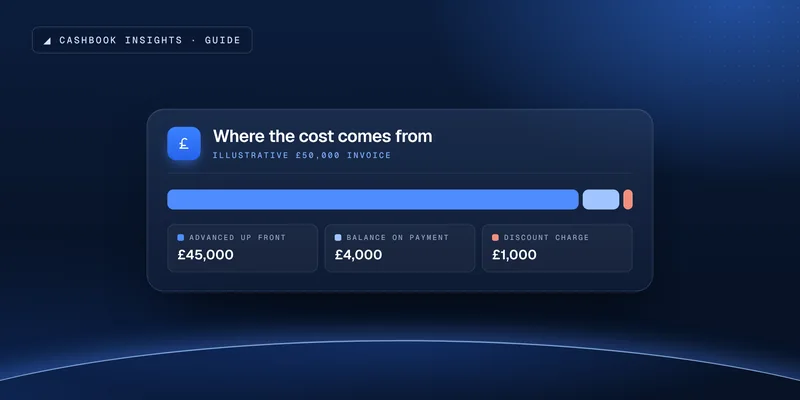
A £50,000 invoice on 30-day terms
On a £50,000 invoice on 30-day terms: £45,000 advanced at 90%, £4,000 when your customer pays, a fee of about £1,000.
Illustrative: a 90% advance and a discount charge of about 2% of the invoice. Rates and advances vary by business, sector and customers.
Check eligibilityAnswers come only from Cashbook Finance’s published guides, with links to the pages used.
General information - not advice, a quote or a credit decision.
Please don’t share personal or financial details here. For your own case, check eligibility or talk it through with the team.

How factoring works, what it costs, when it fits and how it compares with a business loan.
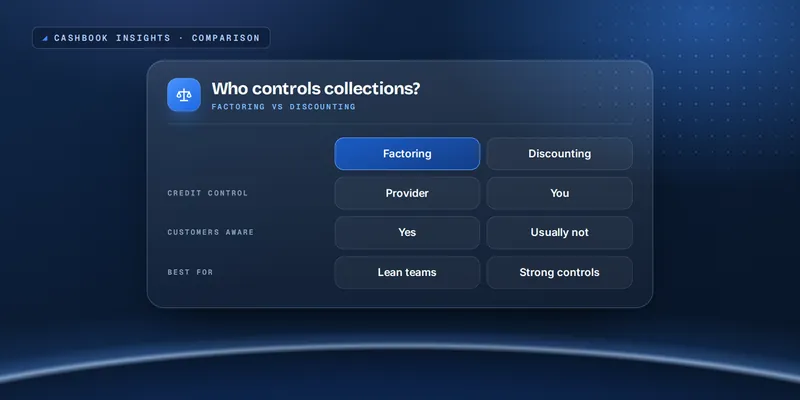
Compare collections, confidentiality, control, eligibility and operational fit.
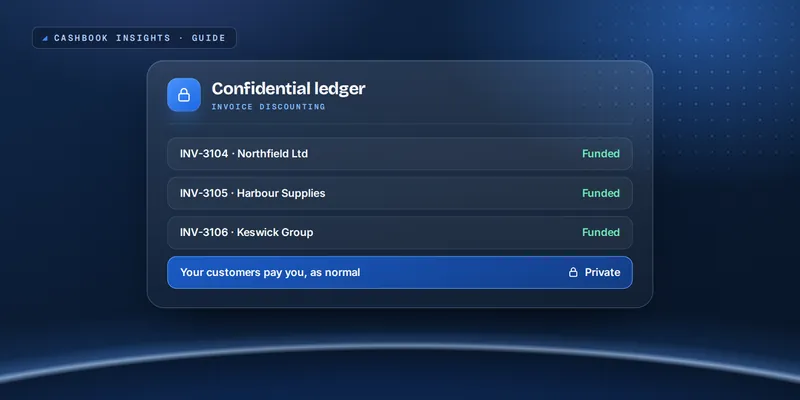
How confidential invoice discounting works and what a business must control well.
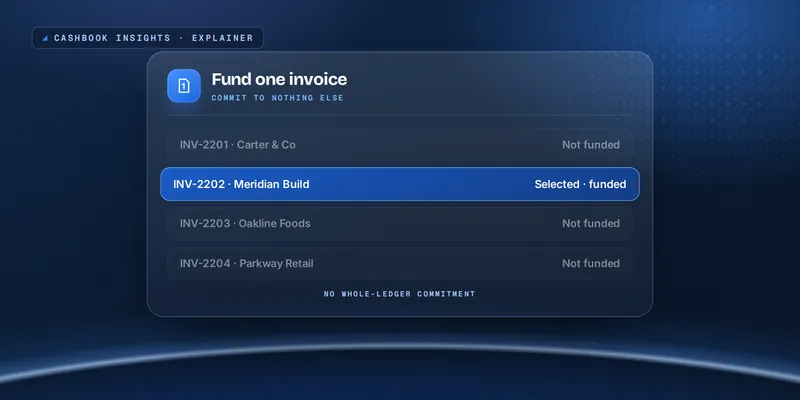
When selective funding is useful and when a full facility is the better answer.
A practical view of using receivables funding for recurring working-capital timing.
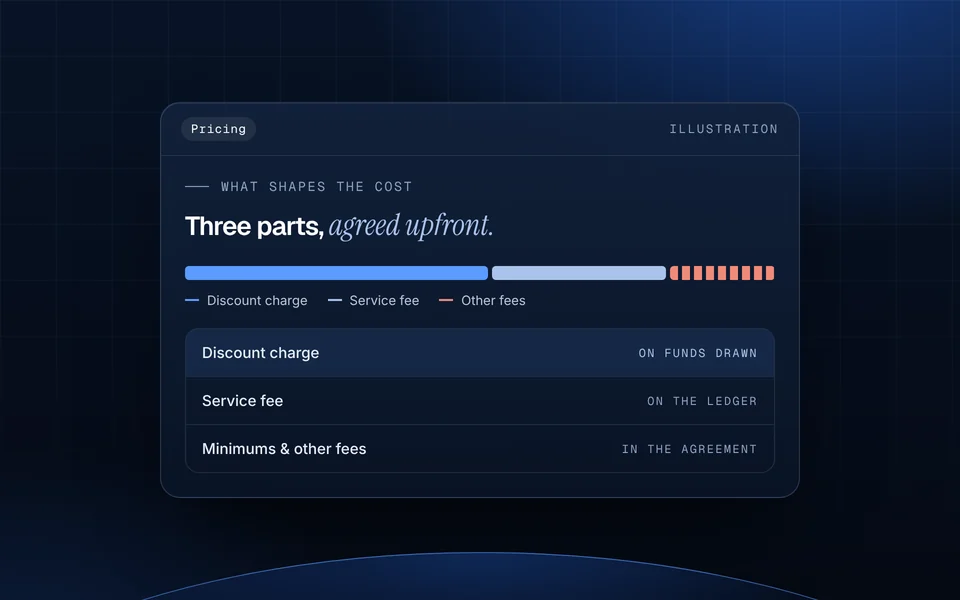
Understand service fees, discount charges, minimums and the all-in cost at realistic utilisation.
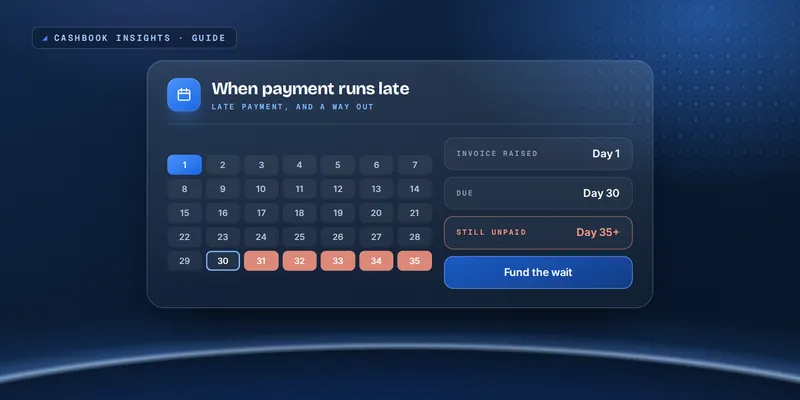
How to reduce the damage from slow customers without mistaking earlier cash for stronger profit.
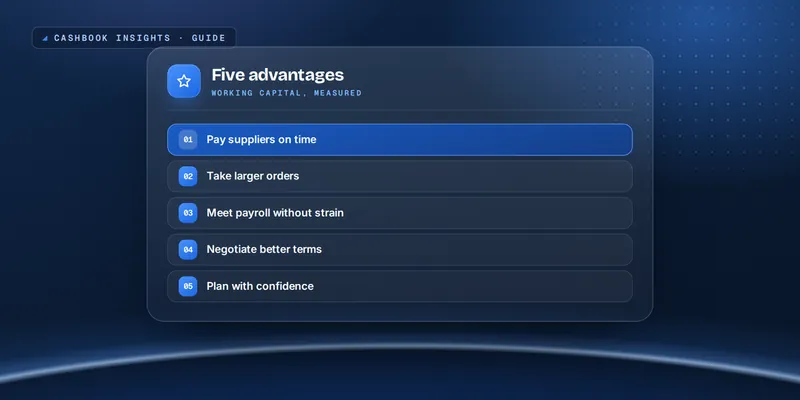
Why liquidity, resilience and purchasing capacity matter as much as headline profit.
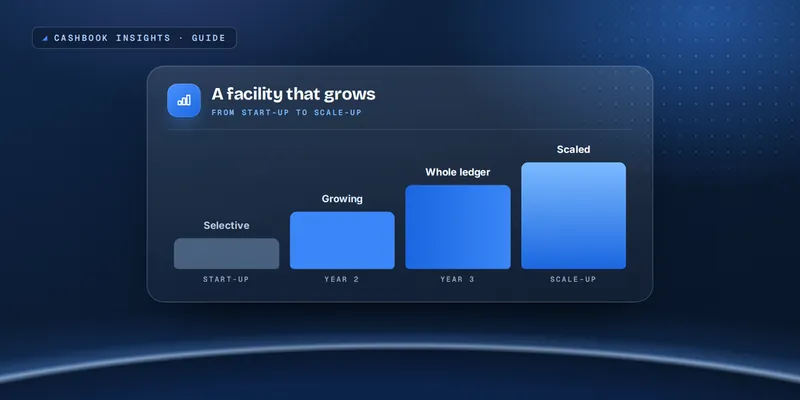
How funding needs change as a B2B business wins customers, hires and grows turnover.
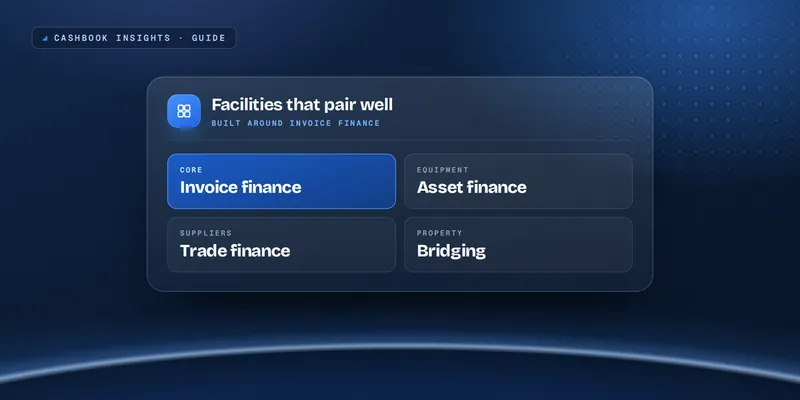
Match recurring working capital, assets, stock and property needs to the right structure.
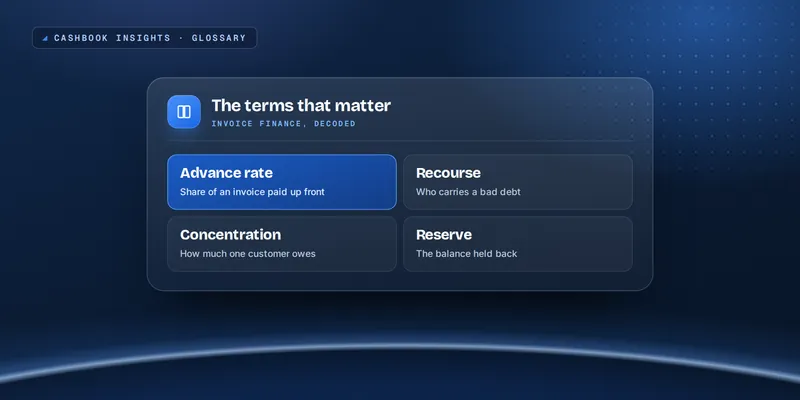
Plain-English definitions for advance rates, recourse, concentration, reserves and more.
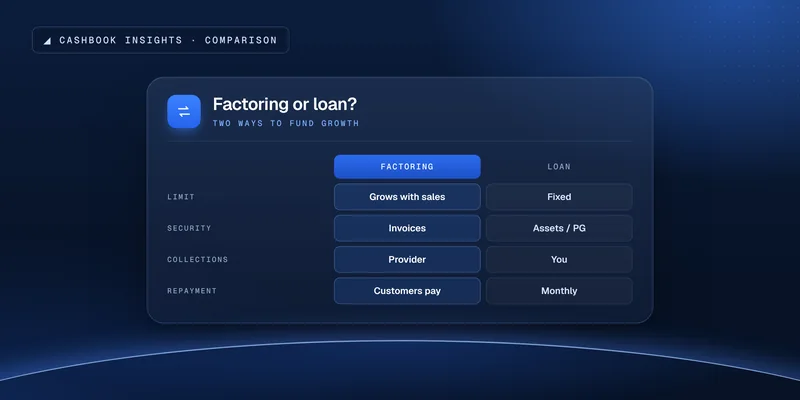
What the product does, what it does not do and where common assumptions fail.
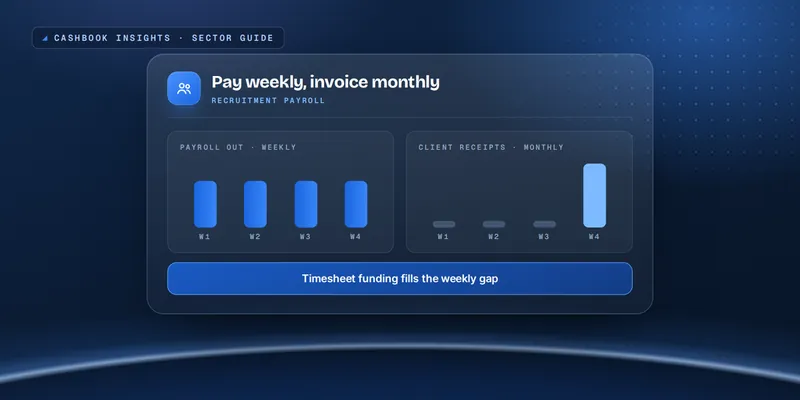
Fund weekly payroll while end-clients settle monthly invoices.
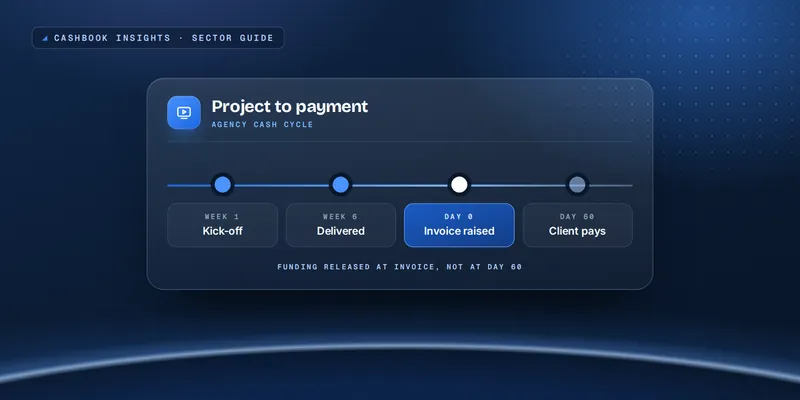
Manage project costs, contractor payments and long client terms without forcing a term loan onto a timing gap.

Concentration, disputes, evidence and payment behaviour matter more than a single large invoice.
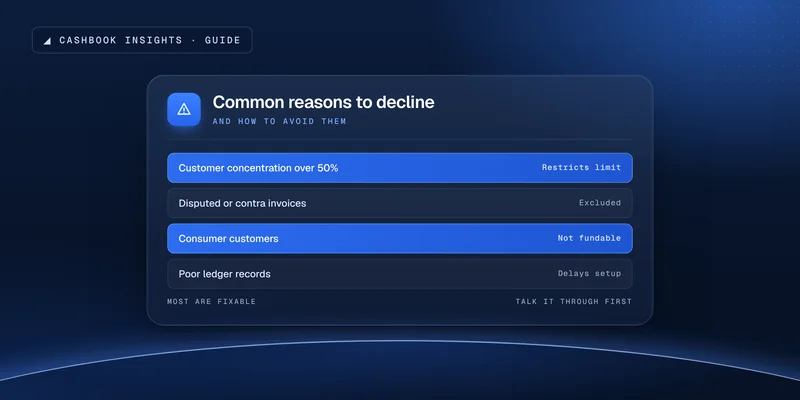
The practical weaknesses that prevent a ledger from supporting a reliable facility.
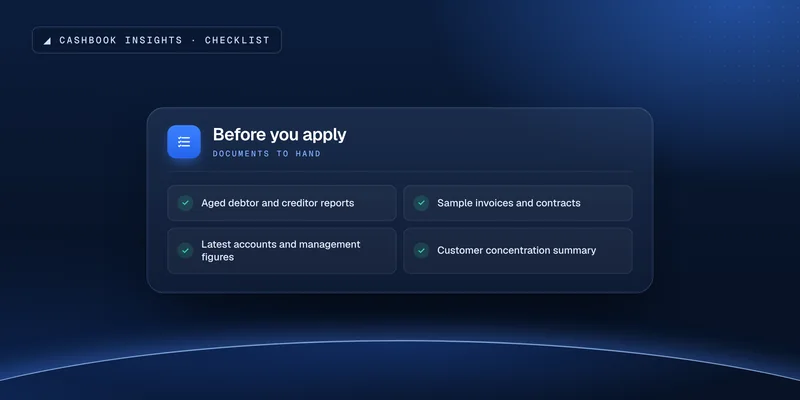
A maintained preparation pack for a more efficient review and a clearer cost comparison.
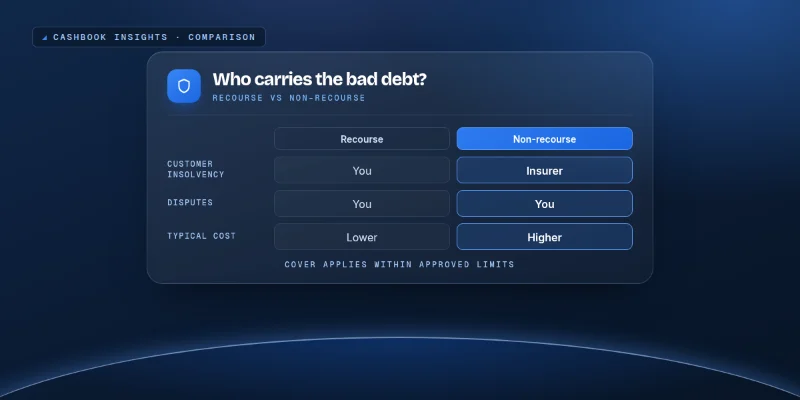
Who carries a customer’s bad debt, what cover excludes and how to choose.
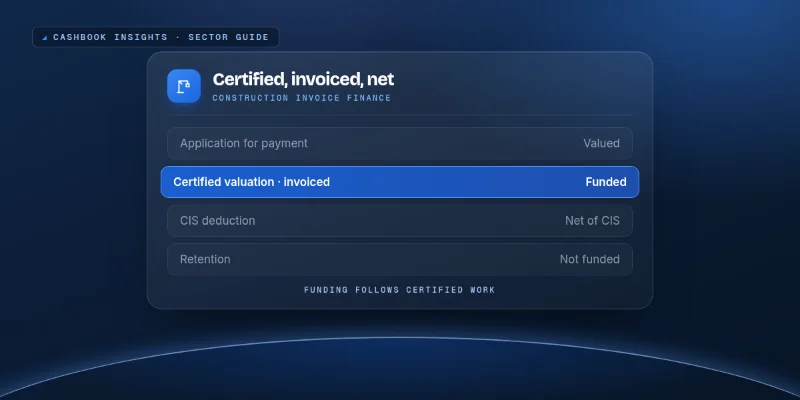
Applications, certification, CIS and retentions: what funders lend against.

A disclosed facility where your own team keeps chasing payment.
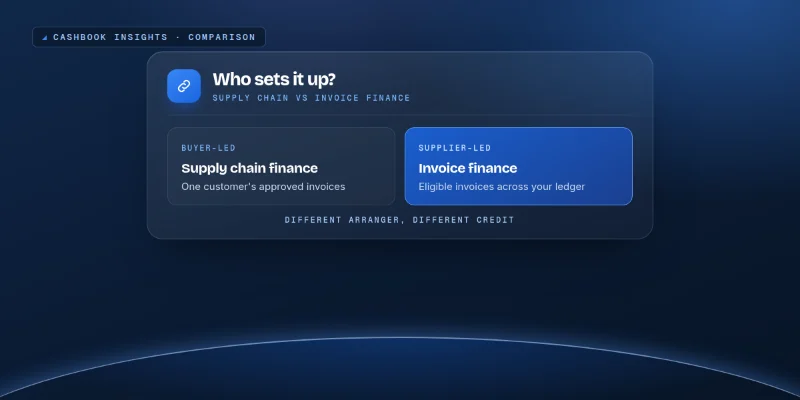
Buyer-led early payment against supplier-led funding you control.
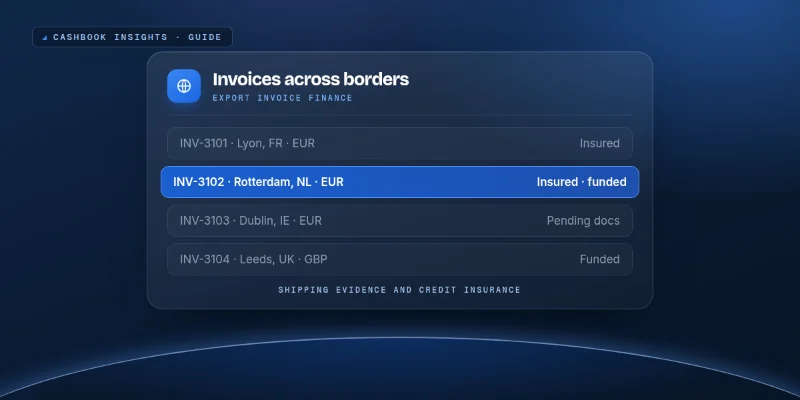
Overseas customers, credit insurance, currency and shipping evidence.
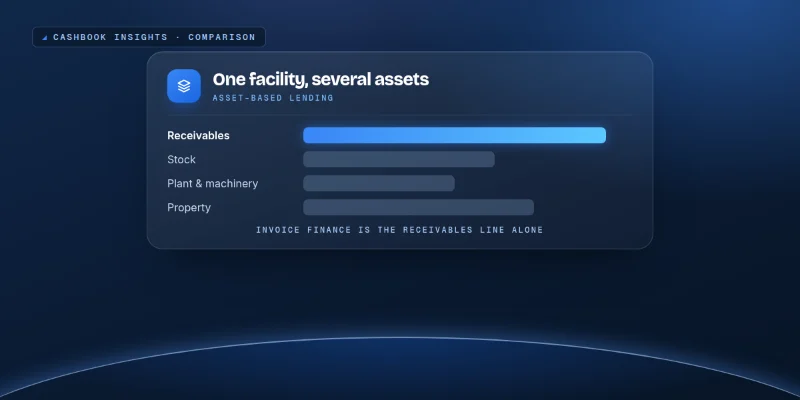
When one multi-asset facility helps, and when invoice finance is enough.
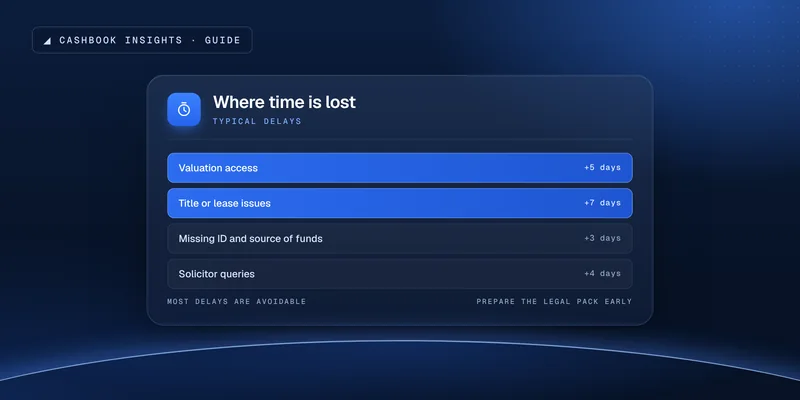
Valuation, title, legal response, exit evidence and borrower readiness determine speed.
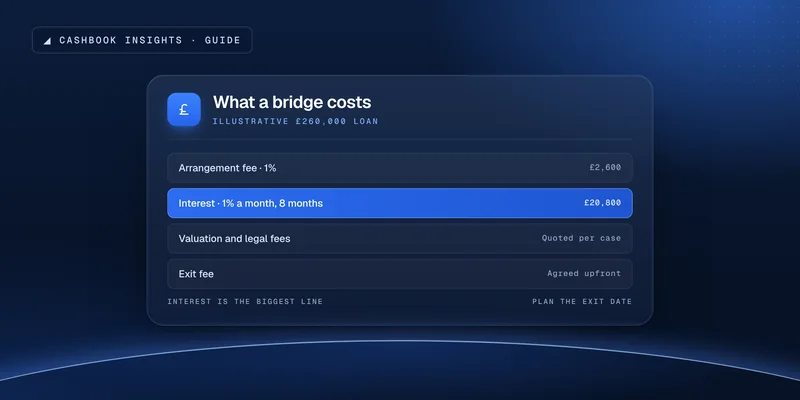
Understand interest, arrangement, valuation, legal and exit costs before committing.
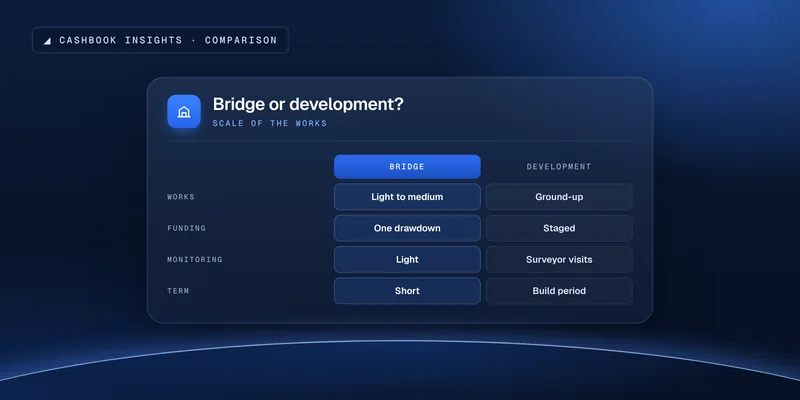
Match the facility to the works, monitoring requirements, duration and repayment route.
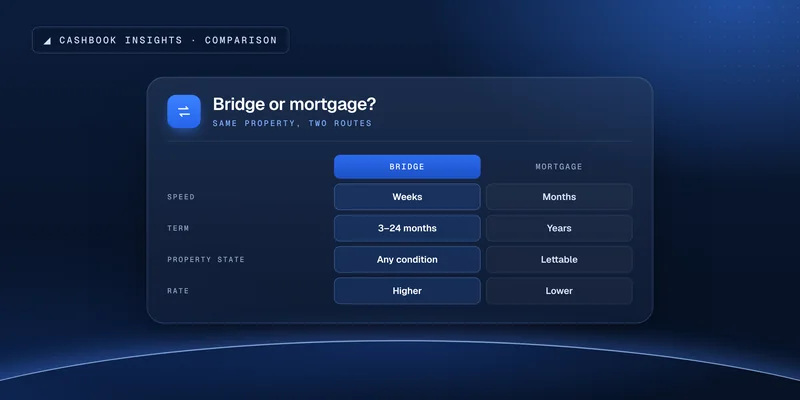
Choose between short-term speed and longer-term property debt based on the actual transaction.
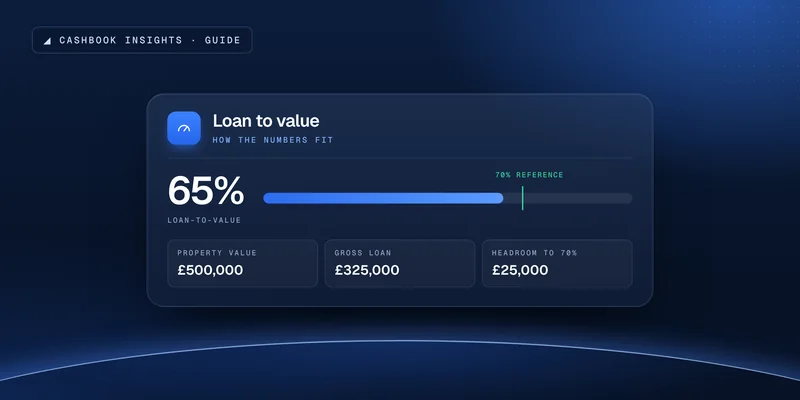
Separate value, gross facility, deductions, net proceeds and headroom.
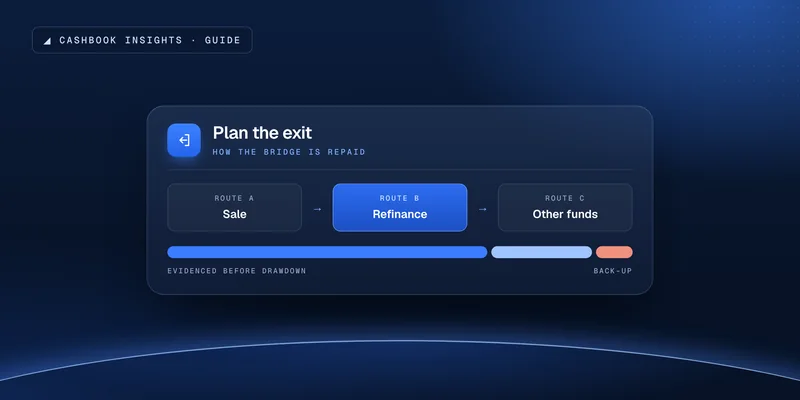
Build an evidenced sale or refinance route with enough time and a credible fallback.
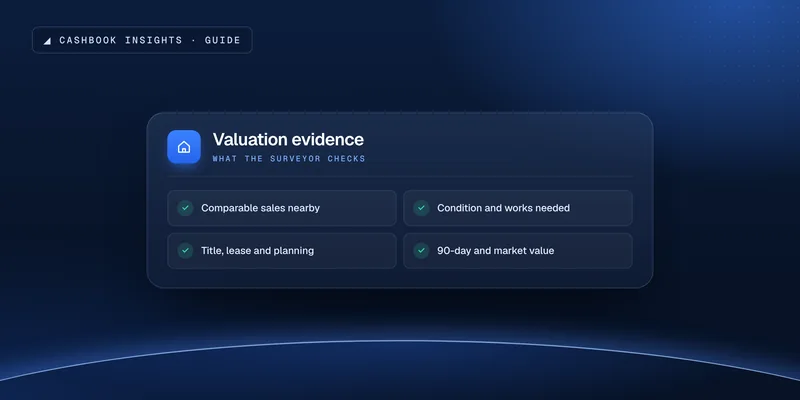
Prepare the property, documents and evidence that anchor the security decision.
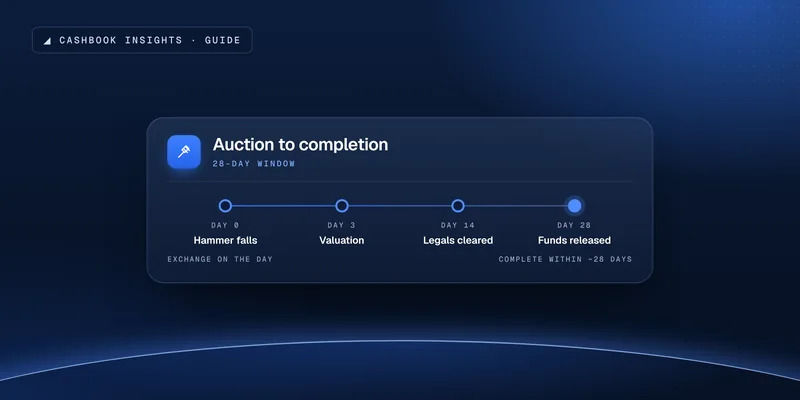
Exchange on the hammer, completion in about 28 days: what to arrange first.
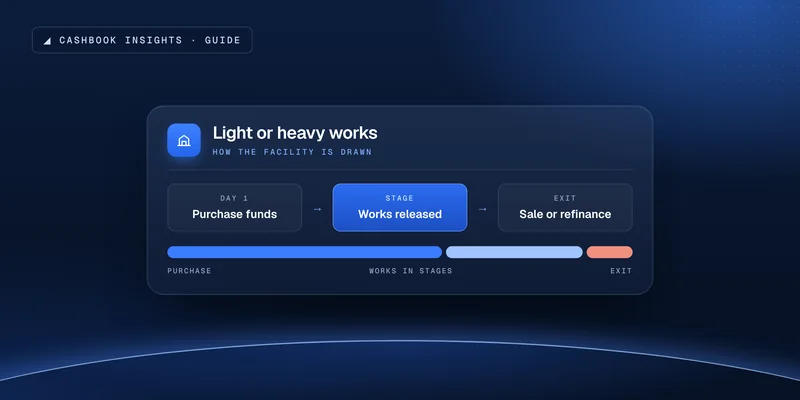
Light and heavy works, staged drawdowns and a credible exit.
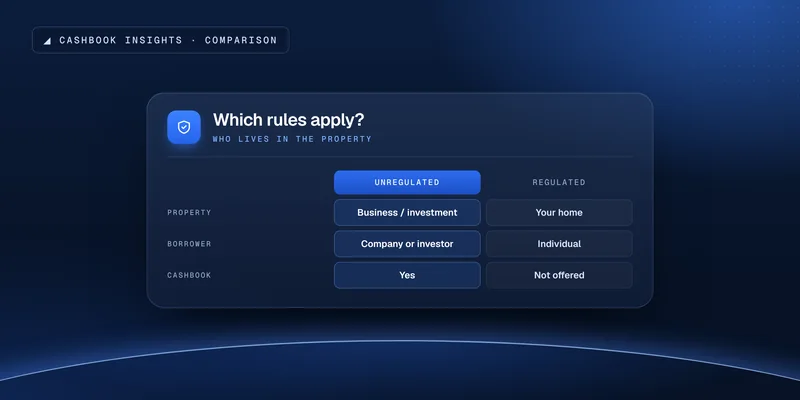
The occupation test, what changes for borrowers, and which loans we provide.
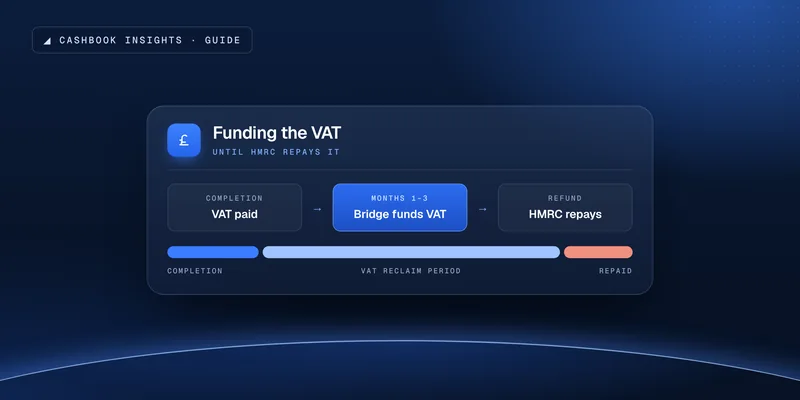
Funding the VAT on a commercial purchase until HMRC repays it.
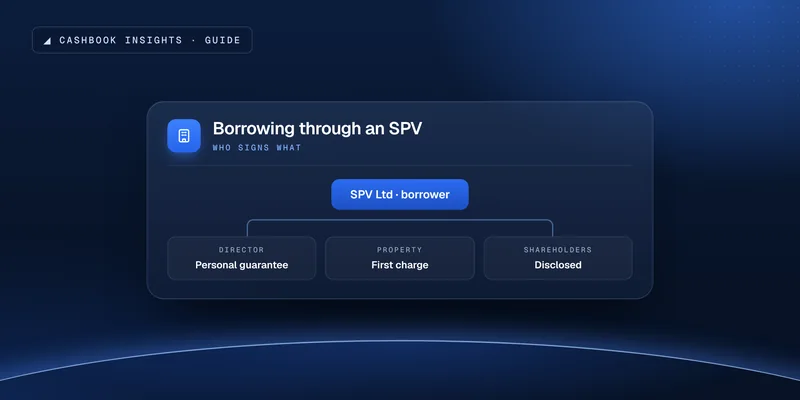
Guarantees, ownership checks, documents and planning the exit.
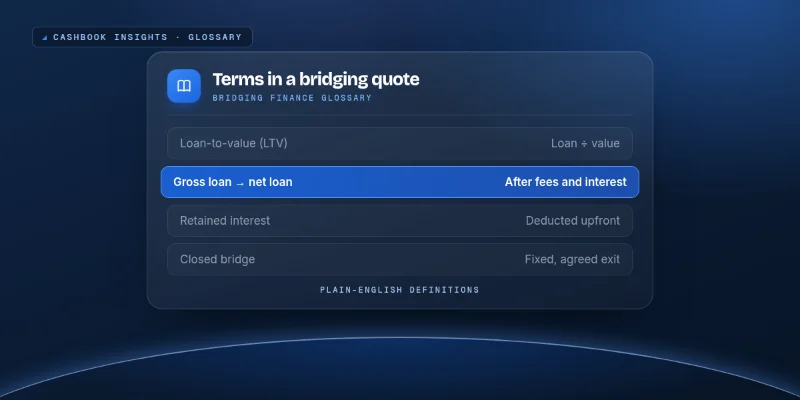
Plain-English definitions for LTV, gross and net loan, retained interest and open and closed bridges.
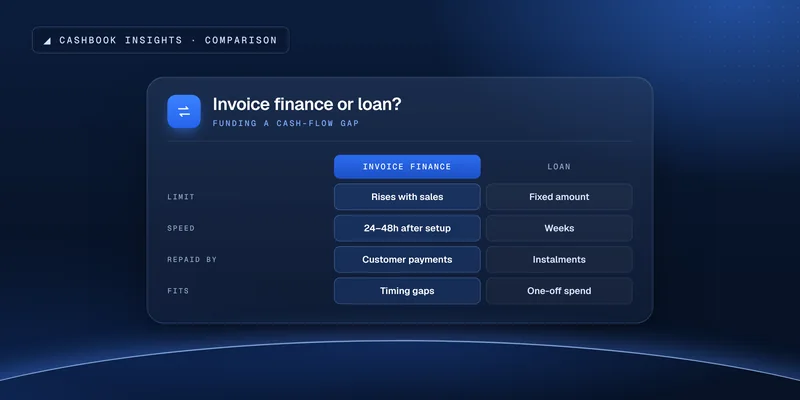
Compare repayment, security, speed and how each copes with growth.
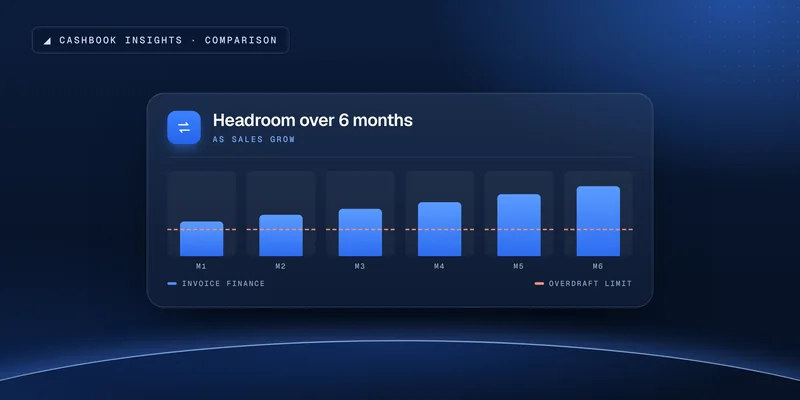
Compare limits, cost, flexibility and what happens as sales grow.
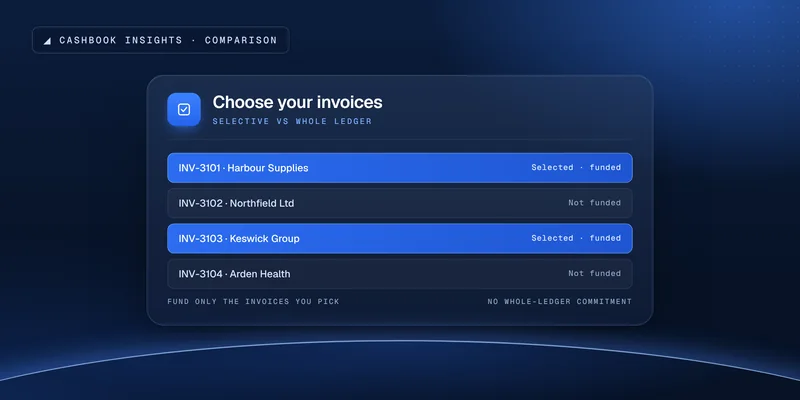
One-off invoices or the whole ledger: cost, commitment and control.
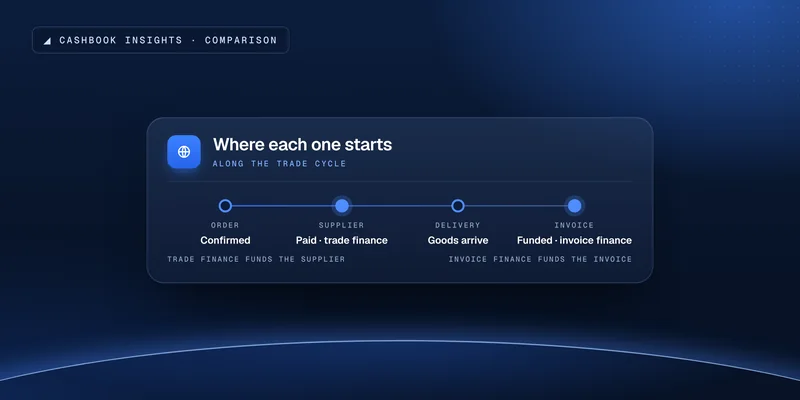
Supplier payments against confirmed orders, or invoices already raised.
Prefer to talk it through? A director will happily walk you through the right option for your business.
Start an applicationSee discounting, factoring, selective finance, timesheet finance and trade finance side by side.
Compare products →Use five short questions to narrow the most relevant route.
Start selector →Review the factors that influence structure and indicative terms.
Pricing and decisions →See illustrative examples of payroll, stock, project and property timing gaps.
View case studies →Compare invoice finance and overdrafts for UK businesses dealing with late customer payments and working-capital pressure.
Compare →ComparisonCompare invoice finance and business loans for UK companies funding cash-flow gaps, growth, payroll or supplier pressure.
Compare →ComparisonCompare invoice factoring and invoice discounting, including collections, confidentiality, control and suitability.
Compare →ComparisonCompare selective invoice finance with full-ledger invoice finance for one-off invoices, repeat funding and working-capital planning.
Compare →ComparisonCompare trade finance and invoice finance for supplier payments, stock purchases and customer invoices.
Compare →ComparisonCompare bridging finance and development finance for property purchases, refurbishment, timing gaps and construction projects.
Compare →Next step
A director reviews every application and gives a first view within one working day.