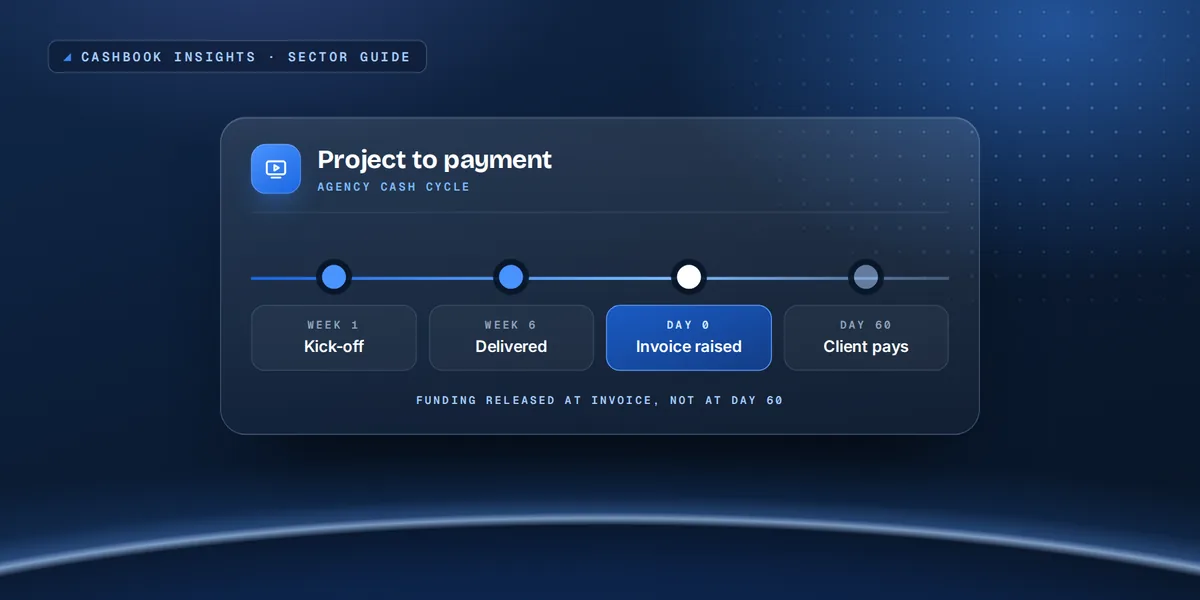
The digital media cash-flow squeeze
You pay people and platforms now, but invoice on milestones or completion and then wait 30, 60 or even 90 days for a brand or media buyer to settle. The bigger and better the client, sometimes the slower the payment - which ties up cash precisely when you’re growing.
How invoice finance helps
Funding your receivables releases up to 90% of each invoice within 24 to 48 hours, so you can cover salaries, freelancers and ad spend without waiting on client payment cycles. As you win more work, the funding grows with you.
Points to watch in media billing
Invoice quality matters: funders fund completed, unconditional invoices best, so staged or contingent billing needs the right structure. A spread of clients also helps, since heavy reliance on one big account can cap available funding.
If your agency’s growth keeps running ahead of its cash, invoice finance is well worth exploring. We’ll give you a straight view on fit.
Invoice finance for agencies: a practical decision test
Agency revenue can look strong while cash remains tight because payroll and freelance costs land before clients approve and pay campaigns. Invoice finance can bridge that timing mismatch, but only where billing milestones, acceptance and ownership of the receivable are clear. Vague scopes and disputed change requests weaken fundability.
Commercial fit
Separate retainers, pass-through media spend and project fees. The best candidates are completed, accepted services invoiced to creditworthy businesses. Unapproved work in progress and speculative performance fees may not support an advance.
Evidence and eligibility
Keep signed scopes, purchase orders, delivery evidence and client approval trails. Providers will want to see that invoices are unconditional and not subject to broad set-off, cancellation or performance clauses.
Operational fit
Align the facility with the agency billing workflow. Account teams need to raise invoices promptly, finance needs clean reconciliations, and client disputes must be surfaced early rather than hidden until collection.
Alternatives
For one-off equipment or acquisition spend, a term facility may be cleaner. For recurring payroll pressure caused by thirty- to ninety-day agency invoices, invoice finance usually matches the operating cycle more closely.
Invoice finance for agencies: model the downside, not just the headline
Model each client separately, including concentration limits and the lag between campaign completion, approval and invoicing. Include freelance commitments and media costs that may be payable before the client invoice becomes eligible.
Where this can go wrong
A large client can dominate both revenue and borrowing availability. If that account pauses campaigns, disputes work or pays late, cash headroom can drop quickly. Set a concentration contingency and avoid committing fixed costs against unconfirmed pipeline.
Invoice finance for agencies: questions to ask before signing
- Which invoices would be eligible, and what would reduce the available advance for invoice finance for digital-media agencies?
- What is the all-in cost at expected utilisation, including minimums, reserves and exit terms?
- Who owns customer communication, reporting, reconciliations and dispute escalation?
- How does the facility behave if sales fall or the largest debtor pays late?
Invoice finance for agencies: documents and controls to prepare
Every invoice finance discussion goes better with the same core pack: a current aged-debt report, representative contracts and invoices with delivery or acceptance evidence, recent management accounts with a short cash forecast, and an honest schedule of credit notes, bad debts and customer concentration. We keep one maintained resource covering the full pack, the questions that surface the all-in cost, and what to monitor once a facility is live - read the invoice finance preparation checklist.
This guide is general information, not a recommendation or an offer of finance. Suitability, availability, pricing and terms depend on the business, the debtor ledger and the proposed structure.