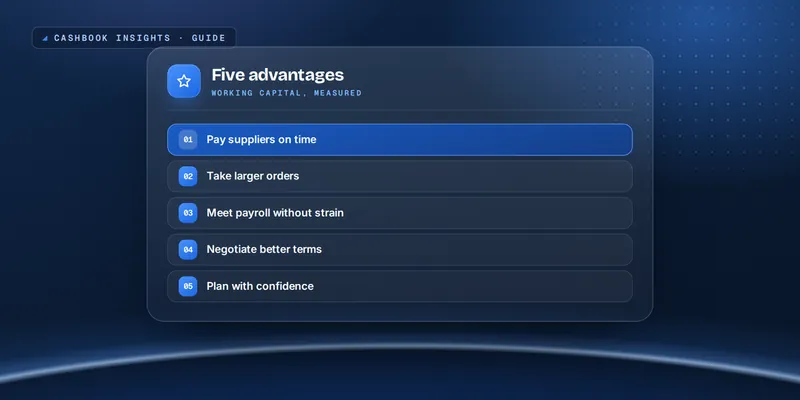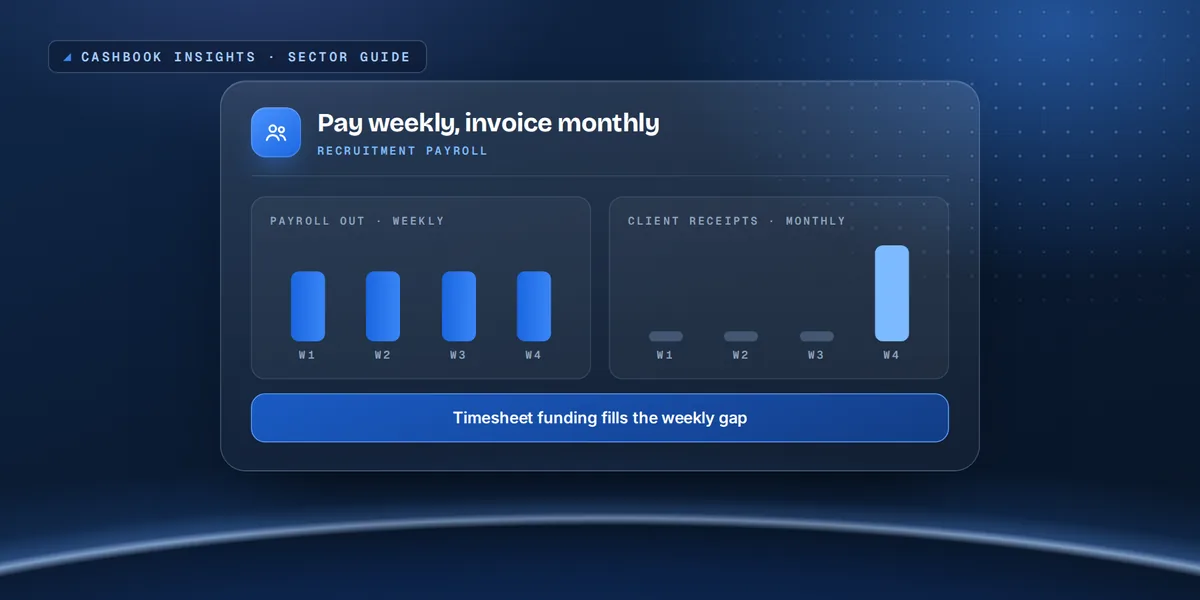
1. It bridges the weekly-vs-monthly gap
Advancing up to 90% of each invoice within 24 to 48 hours means the cash to pay this week’s contractors is there, even though the client won’t pay for a month. The single biggest constraint on temp recruitment - funding the payroll gap - effectively disappears.
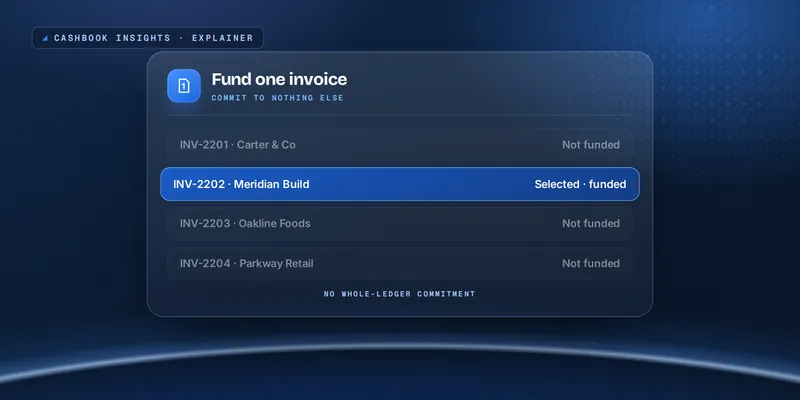
2. Funding grows as you place more
Because the facility scales with your invoicing, every new placement brings its own funding headroom. You can take the next contract without first waiting to be paid for the last - growth funds itself.
3. Timesheet finance fits the workflow
Recruitment-specific timesheet finance is designed around how agencies actually bill, turning approved timesheets into funded invoices smoothly and quickly.
4. Optional credit control
Hand collections to the funder and your team spends its time placing candidates and winning clients, not chasing payment. For a lean agency, that focus is worth a lot.
Recruitment invoice finance: a practical decision test
Recruitment and staffing businesses often pay workers weekly while clients pay monthly or later. Invoice finance can align those cycles, but funding depends on approved timesheets, clear contractual responsibility and the credit quality of end clients. Payroll cannot wait for an unresolved billing query.
Commercial fit
The strongest fit is temporary or contract staffing with repeat B2B invoices and reliable timesheet approval. Permanent placement fees with rebates or contingent guarantees need separate treatment.
Evidence and eligibility
Keep signed terms of business, approved timesheets, assignment records and client purchase orders. Providers may verify hours and rates, so evidence must be complete before payroll deadlines.
Operational fit
Set cut-off times for timesheet approval, invoicing and funding requests. Recruiters, payroll and finance need one process; late approvals can create a cash gap even with a facility in place.
Alternatives
A modest reserve or overdraft may cover isolated payroll timing. A revolving receivables facility is more appropriate where the weekly-to-monthly mismatch is structural and grows with placements.
Recruitment invoice finance: model the downside, not just the headline
Forecast payroll by week and client receipts by realistic payment date. Include holiday pay, tax, pension obligations, rebates and concentration limits. Stress the largest client paying late.
Where this can go wrong
Rapid headcount growth can increase payroll faster than eligible invoices are approved. Do not commit workers based only on signed contracts; model the approval and funding lag.
Recruitment invoice finance: questions to ask before signing
- Which invoices would be eligible, and what would reduce the available advance for funding recruitment and staffing payroll?
- What is the all-in cost at expected utilisation, including minimums, reserves and exit terms?
- Who owns customer communication, reporting, reconciliations and dispute escalation?
- How does the facility behave if sales fall or the largest debtor pays late?
Recruitment invoice finance: documents and controls to prepare
Every invoice finance discussion goes better with the same core pack: a current aged-debt report, representative contracts and invoices with delivery or acceptance evidence, recent management accounts with a short cash forecast, and an honest schedule of credit notes, bad debts and customer concentration. We keep one maintained resource covering the full pack, the questions that surface the all-in cost, and what to monitor once a facility is live - read the invoice finance preparation checklist.
This guide is general information, not a recommendation or an offer of finance. Suitability, availability, pricing and terms depend on the business, the debtor ledger and the proposed structure.