

The exit is vague
A sale or refinance route should be specific enough to underwrite, not a hopeful statement.
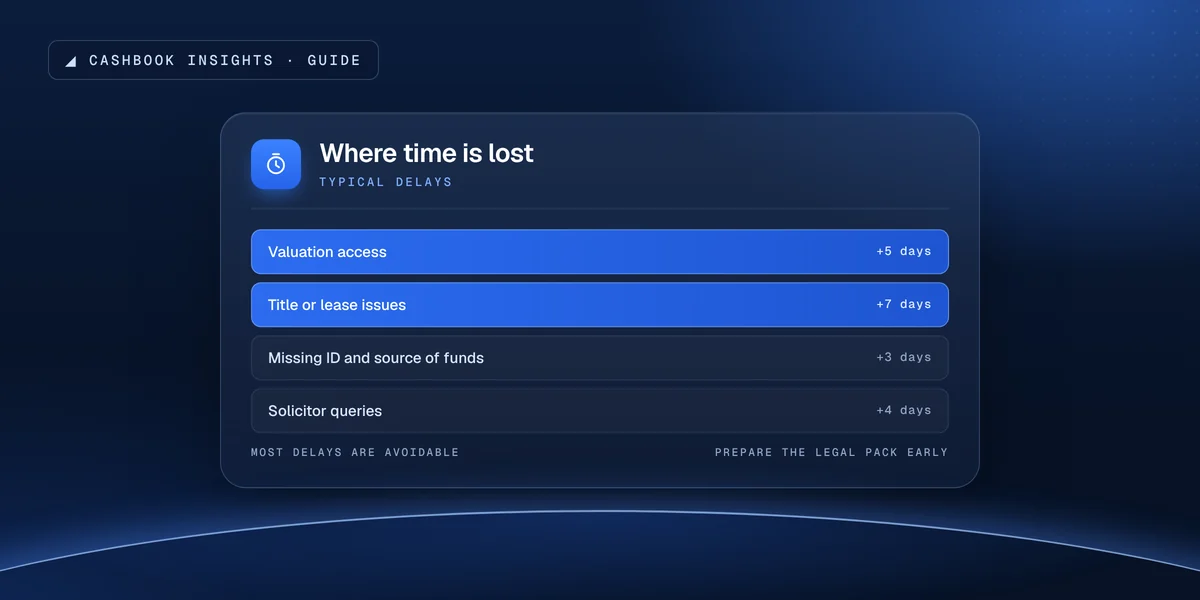
Speed is earned before completion. A bridge slows down when title, valuation, legal response or exit evidence is weak.
Bridging structure check
A £325,000 loan against a £500,000 property
Within a 70% illustrative LTV reference point.
A £325,000 loan against a £500,000 property is 65% loan-to-value; equity remaining £175,000.
Security risk: Your property may be repossessed if you do not keep up repayments on a loan secured against it.
Use this before applying. If the weak point is obvious, solve it before asking for terms.
A sale or refinance route should be specific enough to underwrite, not a hopeful statement.
Legal defects, access issues, planning uncertainty or stale valuation evidence slow the file.
If the facility only works at an optimistic value, the deal is fragile before it starts.
Bridging is described as fast, but speed depends on readiness. Title defects, unclear ownership, missing planning information, valuation access, company authorities, existing charges and an unsupported exit can stop a case regardless of how urgent the deadline is.
The fastest route is to surface those issues at the first conversation and run valuation, legal work, source-of-funds checks and exit evidence in parallel where appropriate. Compressing the calendar does not remove due diligence; it makes accurate information and decisive responses more important.
In Cashbook Finance bridging reviews, speed depends on the quality of the file rather than the word “bridging”. Valuation issues, title or legal queries, incomplete borrower evidence, changing loan-to-value, unclear works budgets and an unproven exit route are recurring causes of delay. A complete case with a credible repayment route is materially easier to progress.
This reflects recurring factors in Cashbook Finance underwriting and case reviews. It is general information, not an approval promise or a substitute for assessment of a specific application.
This deeper section turns “legal and valuation delays” into a practical critical path, with early-warning signs and controls for each dependency.
Purpose, borrower contribution, security, charge position and repayment route must be coherent before speed is meaningful.
Access, comparable evidence, condition, planning and special assumptions can create follow-up work.
Title, searches, enquiries, corporate authority, source of funds and existing charges create the main dependency chain.
Conditions, insurance, signed documents and funds flow must all align on the same day.
| Delay point | Early warning | What reduces delay |
|---|---|---|
| Valuation access | Tenant, agent or vendor has not confirmed access. | Book access when terms are accepted, not after legal work starts. |
| Title or charge issue | Existing lender consent, restriction or missing document. | Provide title documents and current lender details at the outset. |
| Exit not evidenced | Refinance is described as an intention rather than an active, affordable route. | Supply broker/lender correspondence, affordability evidence and contingency time. |
| Borrower contribution | Deposit, fees or works funding cannot be reconciled. | Show source of funds and a complete costs schedule early. |
| Last-minute changes | Purchase price, borrowing entity or works plan changes after underwriting. | Freeze the structure before documents are issued or accept that review restarts. |
Extra interest = gross loan × monthly rate × additional monthsAdditional total cost = extra interest + duplicated valuation/legal/extension costsDo not call a bridge “fast” without quantifying what a one-week or one-month delay does to the exit and total cost.
Worked example
A £300,000 bridge against a £450,000 property, planned to be repaid by refinance in month 6, completes its refinance in month 8.
Each month the exit slips adds about £3,000 here, before any extension fee.
| Property value | £450,000 |
|---|---|
| Gross loan (66.7% loan-to-value) | £300,000 |
| Arrangement fee, 1%, from the loan | £3,000 |
| Interest at 1% a month, rolled up, for 6 months | £18,000 |
| Repaid at exit (loan plus interest) | £318,000 |
| Cost before valuation and legal fees | £21,000 |
| If the exit is 2 months late | +£6,000 in interest |
Illustrative: interest at 1% a month, rolled up, and an arrangement fee of 1% of the loan. Valuation and legal costs are extra and quoted per case. Bridging finance is secured against property, which may be repossessed if repayments are not maintained.
Most delays are visible before the deadline if each dependency is owned.
Access, comparable evidence, condition and report queries can delay the credit decision.
Title defects, searches, existing charges and incomplete replies can stop completion.
Weak refinance evidence, unexplained deposit sources or insufficient net proceeds create late-stage problems.
Official guidance and legislation on the rules this page refers to. They explain the rules in general; take advice on your own position.
Bridging delays usually come from unclear security, weak exit evidence or legal details that should have been surfaced before the deadline became urgent.
Next step
A director reviews every application and gives a first view within one working day.