

Start with the lender’s valuation
The relevant value may differ from the purchase price, estate-agent estimate or development appraisal. Structure against the value the lender can rely on.
Loan-to-value (LTV) is the loan as a percentage of the property’s value. It is a relationship, not a headline limit. Usable leverage depends on value, fees, retained interest and valuation headroom.
Bridging structure check
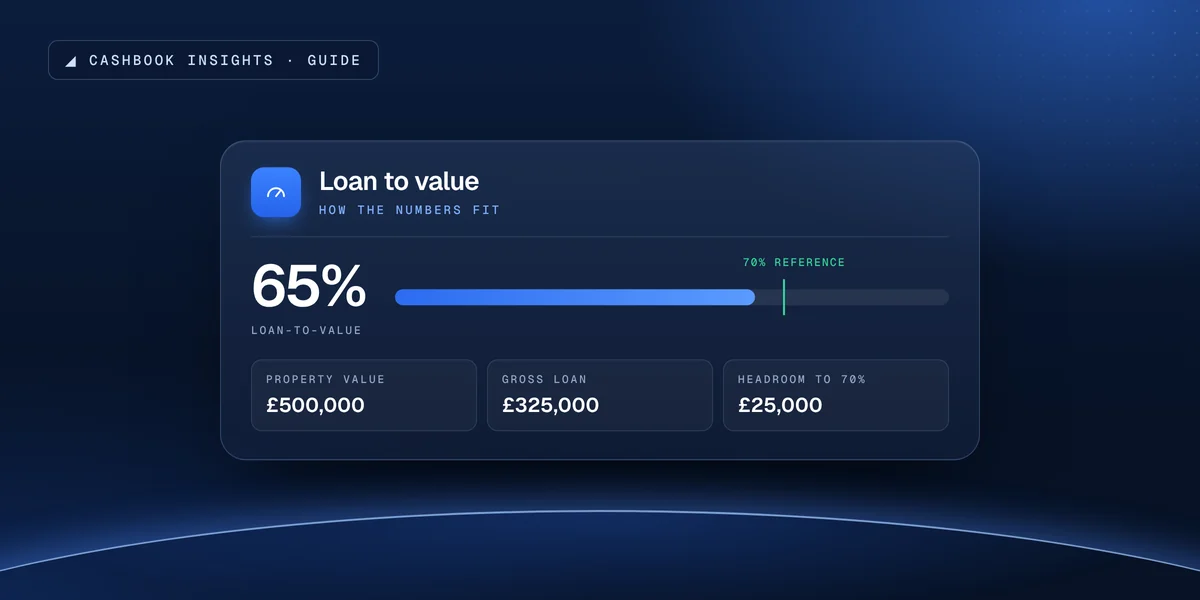
A £325,000 loan against a £500,000 property
Within a 70% illustrative LTV reference point.
A £325,000 loan against a £500,000 property is 65% loan-to-value; equity remaining £175,000.
Security risk: Your property may be repossessed if you do not keep up repayments on a loan secured against it.
A clean LTV discussion distinguishes value, gross debt and cash released. Blurring them produces false comparisons.
The relevant value may differ from the purchase price, estate-agent estimate or development appraisal. Structure against the value the lender can rely on.
The gross facility can include retained interest and agreed costs. Net proceeds are what the borrower actually receives after deductions and redemptions.
A deal that only works at the most optimistic value has no resilience. Allow room for valuation changes, interest accrual and completion costs.
Two facilities quoting the same percentage can produce different net proceeds because fees, retained interest, existing secured debt and legal costs are treated differently. Compare the cash available at completion and the repayment amount at exit, not the percentage in isolation.
The valuation date, property condition, tenure, location, planning position and intended use can all affect the value used. A sensible structure also leaves enough time and equity for the exit to work if the transaction takes longer than planned.
Which suits you
| Your situation | Usually the better fit | Why |
|---|---|---|
| Comparing quotes | Net cash released and repayment at exit | Fees and retained interest differ between lenders |
| Checking you can complete | Cash released against the price and costs | Shows the equity you must add |
| Testing resilience | Gross LTV at a 10% lower valuation | Valuations can move before completion |
| Planning the exit | Redemption figure against the sale or refinance | The exit must repay loan and interest |
Worked example
A £350,000 gross bridge against a £500,000 property (70% gross LTV), with nine months of interest retained in the loan.
A 70% gross LTV releases 63% of the value in cash once the fee and retained interest are taken out.
| Property value | £500,000 |
|---|---|
| Gross loan (70% gross LTV) | £350,000 |
| Less arrangement fee, 1% | −£3,500 |
| Less 9 months’ interest retained at 1% a month | −£31,500 |
| Cash released at completion | £315,000 |
| Net LTV (cash released ÷ value) | 63% |
| Repaid at exit | £350,000 |
Illustrative: interest at 1% a month, rolled up, and an arrangement fee of 1% of the loan. Valuation and legal costs are extra and quoted per case. Bridging finance is secured against property, which may be repossessed if repayments are not maintained.
Gross LTV does not tell the borrower how much cash will be available at completion.
Gross loan divided by the relevant property value.
Usable proceeds after retained interest, fees and costs, divided by value.
Current value, purchase price or another agreed basis may constrain the calculation.
Both: gross LTV sets the lender’s risk, and net LTV tells you the cash you actually receive. Compare quotes on cash released and the amount repaid at exit.
Interest for part or all of the term held back from the loan at completion, so no monthly payments are due. It reduces the cash you receive.
Often the pricing improves at lower LTVs, but fees and the term matter as much. Compare the full cost.
The lender’s valuation, which can differ from the price you agreed.
Bridging delays usually come from unclear security, weak exit evidence or legal details that should have been surfaced before the deadline became urgent.
Next step
Compare the gross facility, deductions, net cash and estimated redemption under the same assumptions.