

Light or heavy?
Cosmetic and internal works are treated closer to a standard bridge; structural work and change of use attract more scrutiny.
Refurbishment bridging funds the purchase of a property that needs work, and sometimes the cost of the works, before the property is sold or refinanced at its improved value.
Bridging structure check
A £325,000 loan against a £500,000 property
Within a 70% illustrative LTV reference point.
A £325,000 loan against a £500,000 property is 65% loan-to-value; equity remaining £175,000.
Security risk: Your property may be repossessed if you do not keep up repayments on a loan secured against it.
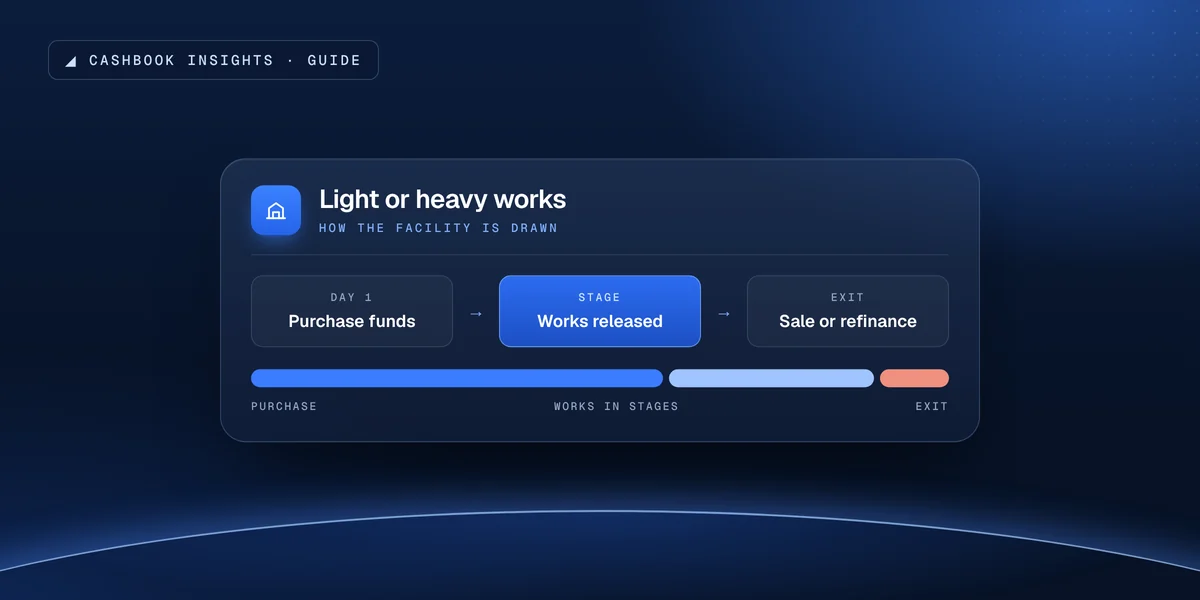
The day-one loan, the works budget and the value after works all have to line up.Lenders treat "light" and "heavy" refurbishment differently, and works money is usually released in stages as the work is completed.
Cosmetic and internal works are treated closer to a standard bridge; structural work and change of use attract more scrutiny.
Funding for works is often released after a surveyor confirms each stage is complete.
Lenders expect a buffer for cost and time overruns, often funded by the borrower.
Lenders look at the current value and the expected value once works are complete, supported by comparable evidence. Loan-to-value is checked at each stage, not just at the start.
Projects that move into new building or major construction are usually better suited to development finance, which is designed for staged build risk.
Which suits you
| Your situation | Usually the better fit | Why |
|---|---|---|
| Kitchens, bathrooms, decoration | Light refurbishment bridge | Close to a standard bridge |
| Structural work or change of use | Heavy refurbishment bridge | More scrutiny, staged drawdowns |
| New build or major extension | Development finance | Built for staged construction risk |
| Works not yet costed | Cost them first | Lenders size works funding on a schedule |
Worked example
An investor buys a property for £300,000 that needs £60,000 of works. The bridge lends 70% of the purchase on day one and releases the works money in stages; the property sells for £420,000 in month 9.
The investor puts in £90,000 plus costs; the value after works has to be evidenced for the numbers to hold.
| Purchase price | £300,000 |
|---|---|
| Day-one loan (70%) | £210,000 |
| Works money, released in stages after each inspection | £60,000 |
| Interest on the day-one loan, 9 months at 1% a month | £18,900 |
| Interest on the works money (about 4 months on average) | £2,400 |
| Arrangement fee, 1% of £270,000 | £2,700 |
| Repaid from the £420,000 sale | £291,300 |
Illustrative: interest at 1% a month, rolled up, and an arrangement fee of 1% of the loan. Valuation and legal costs are extra and quoted per case. Bridging finance is secured against property, which may be repossessed if repayments are not maintained.
If the plan relies on everything going right, the structure needs more headroom.
Scope within light or heavy refurbishment, not new build.
A loan-to-value that still works if costs rise or values soften.
A sale or refinance evidenced at the improved value.
Often yes, released in stages after a surveyor confirms each stage. Some light refurbishments are funded from your own cash.
The expected value once works are complete, backed by comparable sales. Lenders check it rather than accept it.
You usually fund overruns. Build a contingency into the plan.
For new build, major extensions or projects with planning-led construction risk.
Official guidance and legislation on the rules this page refers to. They explain the rules in general; take advice on your own position.
Bridging delays usually come from unclear security, weak exit evidence or legal details that should have been surfaced before the deadline became urgent.
Next step
Share the purchase, the works, the costs and the exit, and a director will give you a straight view on how it could be structured.