Start-up and early growth
Young businesses rarely have the trading history or assets banks want, but they do raise invoices. Funding those invoices provides working capital when other doors are closed - and selective, single-invoice funding keeps commitment low while things are still finding their shape.
Rapid scaling
Growth is when the cash gap bites hardest: you’re delivering and paying for new work months before customers pay you. Because the facility expands automatically with sales, invoice finance lets you say yes to bigger contracts without running out of road.
Maturity and stability
Established businesses use invoice finance to smooth seasonality, fund stock ahead of peak periods, and keep suppliers paid promptly to win better terms. Confidential discounting lets them do all this with no visible change for customers.
Transition and opportunity
During acquisitions, management buy-outs or turnarounds, releasing cash from the debtor book can fund the move without piling on term debt. Matched to the moment, invoice finance is a strategic tool, not just a safety net.
How the funding review changes as a business grows
A useful review is not based on company age alone. It asks whether the receivable is valid, the debtor is credible, the requested funding is proportionate and the operating controls can keep pace with the ledger. The emphasis changes as the business develops.
Start-up and early growth
Priority: prove the underlying sale. Signed contracts, clean invoices, delivery or acceptance evidence and established B2B debtors matter more when trading history is short.
Watch points: customer concentration, founder-dependent controls and limited management information.
Rapid scaling
Priority: show that reporting and collections can scale with turnover. A larger ledger can support more availability, but only if reconciliations, debtor ageing and dispute controls remain reliable.
Watch points: fast-rising concentration, dilution, payroll pressure and operational capacity.
Maturity and stability
Priority: optimise structure, confidentiality, utilisation and total cost while keeping availability tied to eligible debt rather than headline turnover.
Watch points: legacy processes, unnecessary facility headroom and changing customer-payment behaviour.
Transition or acquisition
Priority: model the post-transaction ledger and cash requirement, not just the historic position. The facility must still work after ownership, billing or customer mix changes.
Watch points: overlapping security, one-off adjustments and an exit or refinancing assumption that depends on optimistic forecasts.
This stage-by-stage lens is why a facility should be reviewed as the ledger changes: growth can improve funding capacity while simultaneously increasing concentration, dilution or reporting risk.
Invoice finance as the business grows: a practical decision test
The same facility should not be assumed to fit every stage of a company’s development. Early-stage businesses need flexibility and close support; scaling businesses need capacity and systems; mature businesses may prioritise confidentiality, pricing and control. Review the structure as the ledger and management capability change.
Commercial fit
At each stage, test whether eligible invoiced sales are the main driver of the cash need. If growth shifts toward stock, capital expenditure or long project work before invoicing, another facility may be needed alongside or instead.
Evidence and eligibility
Improve reporting as the business grows: customer concentration, dilution, debtor days, forecast invoicing and management accounts. Better information can support better limits and reduces friction during reviews.
Operational fit
Move from founder-led uploads and collections to documented processes with named owners and reconciliations. A facility that depends on one person becomes fragile as transaction volume increases.
Alternatives
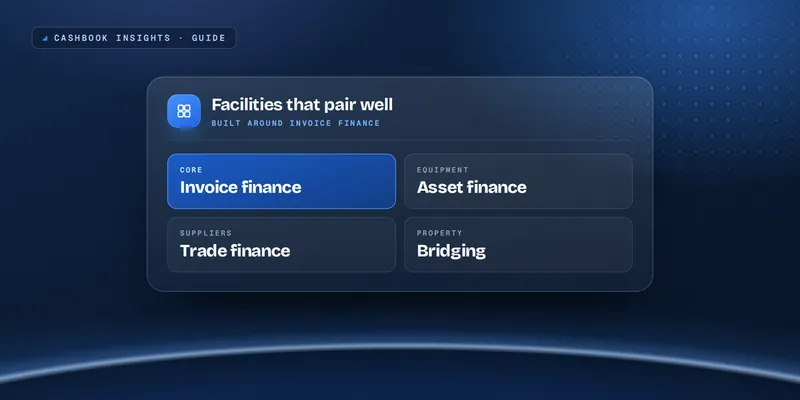
Combine facilities only where each funds a distinct asset or timing need. Asset finance, trade finance and term debt can complement receivables funding, but overlapping security and repayment demands must be understood.
Invoice finance as the business grows: model the downside, not just the headline
Reforecast facility usage after major hiring, acquisitions, customer wins or changes in billing terms. The relevant question is future eligible debt, not last year’s turnover.
Where this can go wrong
A company can outgrow the original product before it outgrows the provider. Warning signs include repeated overpayments, concentration constraints and manual workarounds. Review structure early rather than waiting for a funding bottleneck.
Invoice finance as the business grows: questions to ask before signing
- Which invoices would be eligible, and what would reduce the available advance for using invoice finance through business growth stages?
- What is the all-in cost at expected utilisation, including minimums, reserves and exit terms?
- Who owns customer communication, reporting, reconciliations and dispute escalation?
- How does the facility behave if sales fall or the largest debtor pays late?
Invoice finance as the business grows: documents and controls to prepare
Every invoice finance discussion goes better with the same core pack: a current aged-debt report, representative contracts and invoices with delivery or acceptance evidence, recent management accounts with a short cash forecast, and an honest schedule of credit notes, bad debts and customer concentration. We keep one maintained resource covering the full pack, the questions that surface the all-in cost, and what to monitor once a facility is live - read the invoice finance preparation checklist.
This guide is general information, not a recommendation or an offer of finance. Suitability, availability, pricing and terms depend on the business, the debtor ledger and the proposed structure.