The root of the problem
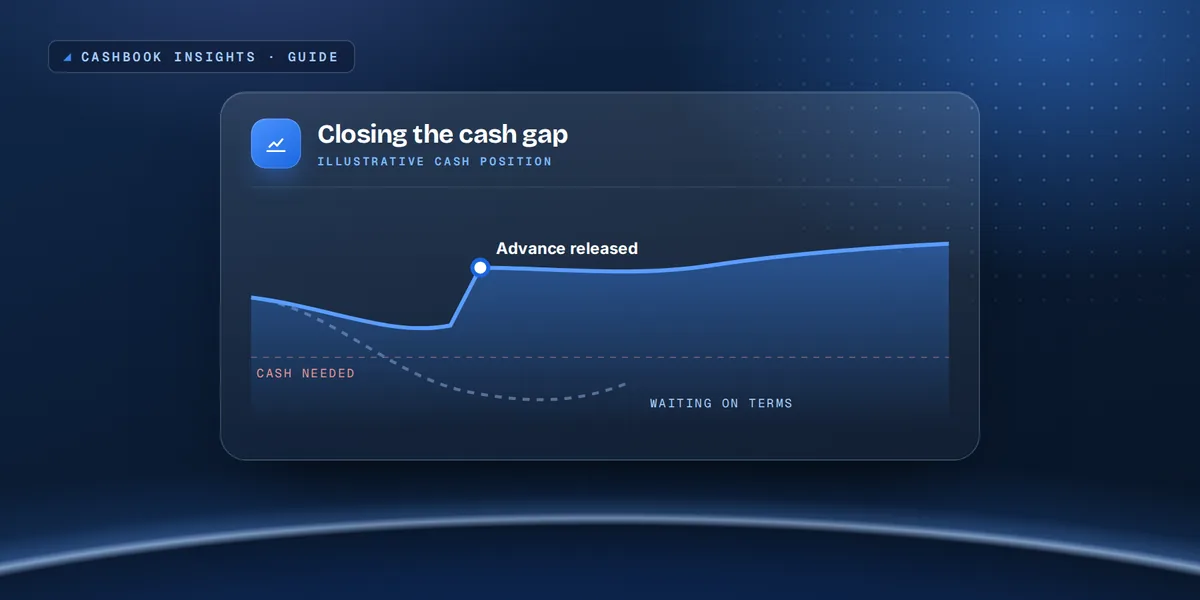
Most B2B businesses wait 30 to 90 days to be paid, while wages, suppliers and VAT go out on schedule. The longer the gap, and the faster you grow, the more cash gets tied up in unpaid invoices - money you’ve earned but can’t yet use.
How invoice finance breaks the cycle
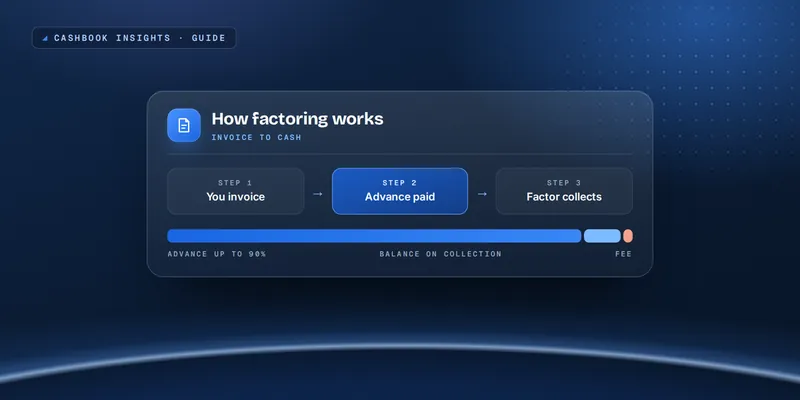
Instead of waiting, a funder advances most of each invoice’s value - up to 90% - within 24 to 48 hours of you raising it. The balance follows when your customer pays. Your cash position is no longer hostage to your customers' payment habits. As turnover accelerates, the relevant evidence and controls also change; our invoice finance by business stage guide sets out that progression.
- Invoice raisedYou complete the work and invoice your customer.
- Up to 90% advancedWithin 24–48 hours of raising an eligible invoice.
- Customer paysTypically 30–90 days later. Without invoice finance, this is the first cash you see.
- Balance releasedThe remainder follows, less the agreed fees.
What it lets you do
- Make payroll comfortably, even in a busy month.
- Pay suppliers on time - and negotiate better terms.
- Take on the next contract without waiting for the last one to pay.
- Stop leaning on overdrafts that are capped and repayable on demand.
It won’t fix poor margins or chronic bad debts - it fixes when cash arrives, not whether. For a fundamentally healthy SME, that’s often exactly what’s needed.
Invoice finance for cash flow: a practical decision test
A cash-flow gap is a timing problem only when the business is fundamentally profitable and invoices are expected to be paid. If the gap is caused by low margins, tax arrears, repeated disputes or falling demand, invoice finance may delay a harder decision rather than solve it. Diagnose the cause before choosing the facility.
Commercial fit
Reconcile the gap to specific approved invoices and predictable operating payments. The closer the shortfall tracks debtor days, the stronger the case for invoice finance. A gap that keeps widening despite stable debtor days points to a different problem.
Evidence and eligibility
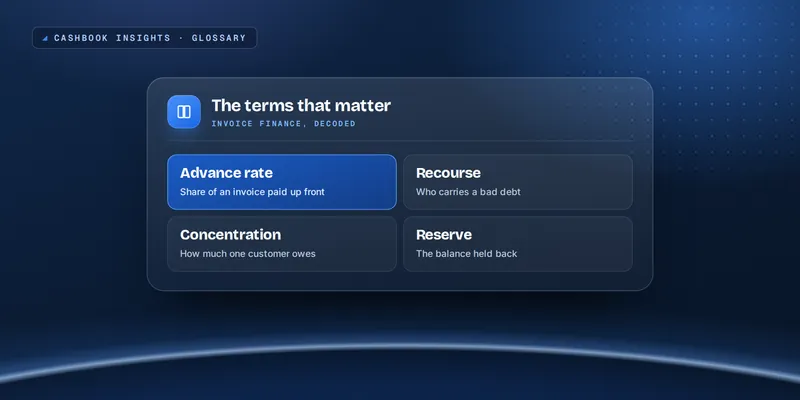
Review aged debt, credit notes, disputed invoices, contra arrangements and customer concentration. These determine availability. The accounting receivables balance is not the same as the amount a funder will accept as eligible collateral.
Operational fit
Model how frequently invoices will be uploaded, verified and reconciled. A facility that is operationally neglected can produce avoidable reserves or funding delays, especially where proof of delivery is inconsistent.
Alternatives
Compare against tighter collections, deposits, staged billing, supplier-term changes and a small overdraft for short volatility. Use invoice finance where the need is recurring and linked directly to B2B credit sales.
Invoice finance for cash flow: model the downside, not just the headline
Forecast cash weekly for at least thirteen weeks. Use actual payment behaviour by customer, deduct expected fees and reserves, and include VAT, payroll and supplier peaks. Run a downside case where the largest debtor pays one month later than normal.
Where this can go wrong
The danger is drawing the maximum advance and treating it as permanent working capital. When sales fall or invoices become ineligible, availability contracts. Keep a liquidity buffer and monitor headroom rather than managing the business to the facility limit.
Invoice finance for cash flow: questions to ask before signing
- Which invoices would be eligible, and what would reduce the available advance for fixing cash-flow gaps with invoice finance?
- What is the all-in cost at expected utilisation, including minimums, reserves and exit terms?
- Who owns customer communication, reporting, reconciliations and dispute escalation?
- How does the facility behave if sales fall or the largest debtor pays late?
Invoice finance for cash flow: documents and controls to prepare
Every invoice finance discussion goes better with the same core pack: a current aged-debt report, representative contracts and invoices with delivery or acceptance evidence, recent management accounts with a short cash forecast, and an honest schedule of credit notes, bad debts and customer concentration. We keep one maintained resource covering the full pack, the questions that surface the all-in cost, and what to monitor once a facility is live - read the invoice finance preparation checklist.
This guide is general information, not a recommendation or an offer of finance. Suitability, availability, pricing and terms depend on the business, the debtor ledger and the proposed structure.