

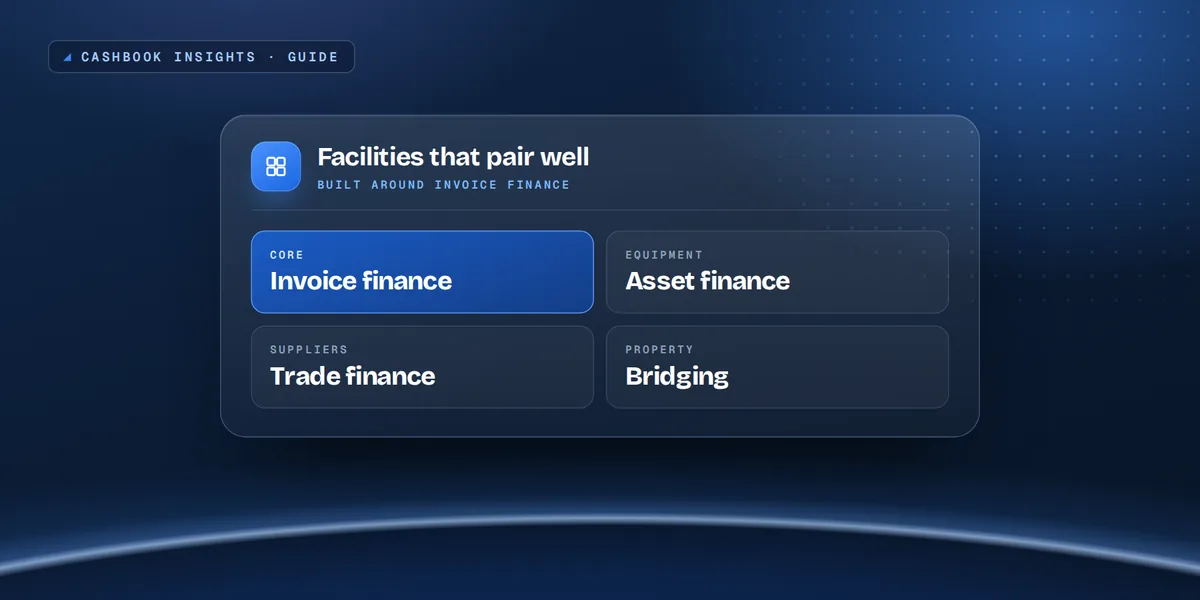
1. Asset finance
For machinery, vehicles or equipment, asset finance spreads the cost of a specific item over its useful life. Invoice finance keeps day-to-day cash flowing while asset finance funds the kit – each doing what it does best.
2. A term loan for one-off projects
A defined project with a clear payback – a fit-out, a relocation, a marketing push – can suit a term loan, while invoice finance carries the ongoing working capital underneath it.
3. A modest overdraft for short wobbles
A small overdraft is handy for very short-term swings. Invoice finance does the heavy lifting on structural cash-flow timing, so the overdraft stays a buffer rather than a crutch.
4. Trade or supply-chain finance
If you import or buy stock ahead of sales, trade finance funds the purchase while invoice finance funds the sale – covering both ends of the cycle. The art is combining facilities so each covers a different need without overlap. We’re happy to help you map that.
Give every facility a purpose and a repayment source
Multiple facilities can strengthen a funding structure when each has a clear purpose and repayment source. They can also create hidden pressure through overlapping security, fixed repayments and covenant interactions. Start with the asset or cash-flow need, then assign the right instrument to it.
Commercial fit
Use invoice finance for recurring cash tied to receivables. Use asset finance for equipment with a useful life, trade finance for specific supplier-to-customer transactions and term debt for defined investments with durable returns.
Evidence and eligibility
Build a complete schedule of security, guarantees, repayment dates and covenants. Each provider needs to understand existing obligations, and the business needs to know which assets remain available.
Operational fit
Coordinate reporting calendars and cash sweeps. A receipt that one lender expects to reduce its balance may also be needed for payroll or another facility’s payment. Operational conflicts should be designed out.
Alternatives
Before adding another product, test whether the existing facility is mis-sized or poorly structured. More lenders are not automatically more flexibility; sometimes one appropriately designed arrangement is simpler and cheaper.
Build one consolidated forecast and stress it
Create a consolidated cash forecast showing all fees, interest, repayments and covenant headroom. Stress it for slower collections and lower sales. A structure that works only in the base case is too tight.
Where this can go wrong
The main risk is funding short-term working capital with fixed debt while also drawing heavily against invoices. Cash can look abundant initially, then contract when repayments continue through a weaker trading period.
Questions to ask when combining facilities
- Which invoices would be eligible, and what would reduce the available advance for combining invoice finance with other facilities?
- What is the all-in cost at expected utilisation, including minimums, reserves and exit terms?
- Who owns customer communication, reporting, reconciliations and dispute escalation?
- How does the facility behave if sales fall or the largest debtor pays late?
Preparing a combined funding review
Every invoice finance discussion goes better with the same core pack: a current aged-debt report, representative contracts and invoices with delivery or acceptance evidence, recent management accounts with a short cash forecast, and an honest schedule of credit notes, bad debts and customer concentration. We keep one maintained resource covering the full pack, the questions that surface the all-in cost, and what to monitor once a facility is live – read the invoice finance preparation checklist.
This guide is general information, not a recommendation or an offer of finance. Suitability, availability, pricing and terms depend on the business, the debtor ledger and the proposed structure.