

Export invoice finance: funding invoices to overseas customers
UK businesses that sell abroad often wait longer to be paid. Export invoice finance advances cash against invoices to overseas customers, in the same way as domestic invoice finance, but funders look harder at the customer's country, the currency, the shipping documents and whether the debt is insured.
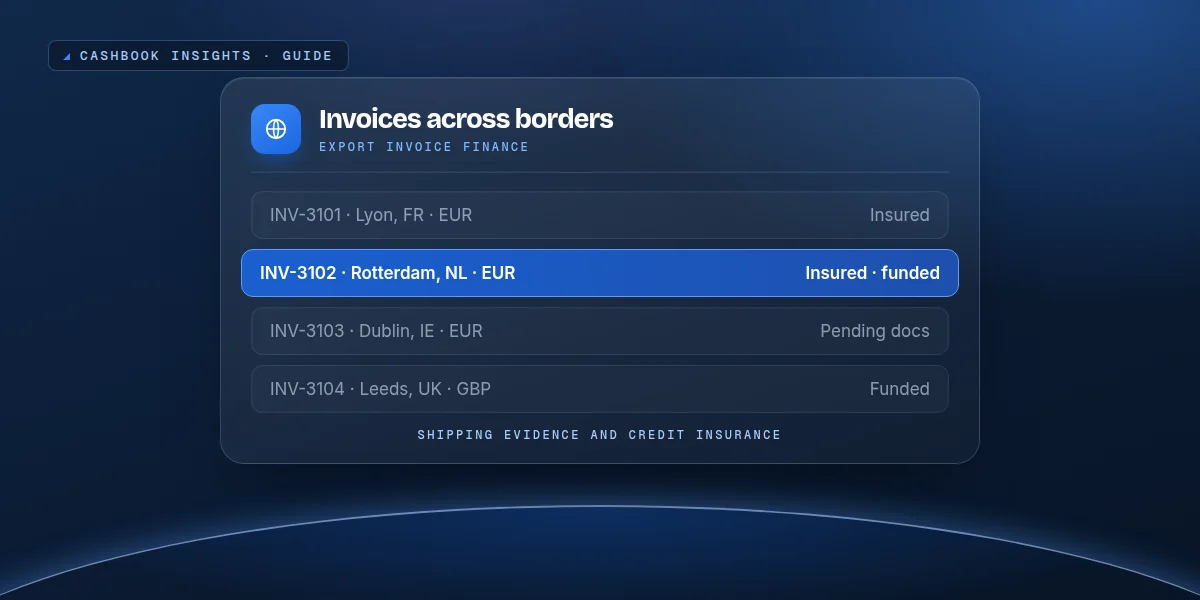
What changes when the customer is overseas
- Longer terms. Export terms of 60-120 days are common, which deepens the cash gap.
- Harder collection. Chasing and enforcing payment abroad is slower and costlier.
- Country and currency risk. Political events, exchange controls and currency movements affect what you receive.
- Proof of delivery. Bills of lading, airway bills and customs documents become part of the evidence.
What funders typically look for
- Customers in countries the funder is willing to accept, with a trading history with you;
- Credit insurance on the overseas debtors, often required or strongly preferred;
- Clear shipping and delivery evidence for each invoice;
- Invoices in currencies the funder can handle, or a plan to manage currency risk;
- No unresolved disputes or quality claims.
How it pairs with trade finance
Invoice finance helps after you have shipped and invoiced. If the pressure comes earlier - paying a supplier or manufacturer before goods leave - trade finance funds that stage, and invoice finance can then take over once the sale is invoiced. See trade finance vs invoice finance and the import and export sector page.
Practical checklist
- List overseas customers, their countries, terms and payment history.
- Check any existing credit insurance and its limits.
- Gather shipping documents for recent invoices.
- Note currencies and how you currently convert receipts.
- Prepare an aged debtor report split by domestic and export customers.
A practical decision test
Export invoices can be funded like domestic ones, but the evidence, insurance and currency questions need answers before a facility is set up.
Commercial fit
Best for exporters with repeat overseas customers, clear terms and a record of being paid.
Evidence and eligibility
Expect checks on shipping documents, customer countries and credit insurance limits for each overseas customer.
Operational fit
Keep shipping evidence matched to each invoice and plan how foreign-currency receipts are converted.
Alternatives
Trade finance before shipment, export credit support, or credit insurance on its own may fit different stages of the cycle.
Model the downside, not just the headline
Model receipts with longer actual payment times and a weaker currency, and check whether the facility still covers your costs.
Where this can go wrong
Invoices to countries or customers outside the insurer's or funder's limits may not be funded at all. Check eligibility before relying on export receipts in a cash forecast.
Questions to ask before signing
- Which countries and currencies can be funded?
- Is credit insurance required, and who arranges it?
- What shipping evidence is needed for each invoice?
- How are currency movements handled between invoice and payment?
Documents and controls to prepare
Every invoice finance discussion goes better with the same core pack: a current aged-debt report, representative contracts and invoices with delivery or acceptance evidence, recent management accounts with a short cash forecast, and an honest schedule of credit notes, bad debts and customer concentration. We keep one maintained resource covering the full pack, the questions that surface the all-in cost, and what to monitor once a facility is live - read the invoice finance preparation checklist.
This guide is general information, not a recommendation or an offer of finance.
See what your invoices could release
Tell us how your business invoices and a director will give you a straight, no-obligation view on fit - usually within a day or two.
Talk to us →